
Performance and longevity are not separate goals
Traditional medicine is good at identifying disease and managing risk. But healthspan depends on more than the absence of disease.
Cardiorespiratory fitness, strength, power, body composition, cardiometabolic health, movement, and recovery influence how well you function today — and how resilient you remain over time.
We measure these capacities alongside traditional medical risk to build a more complete picture of health.
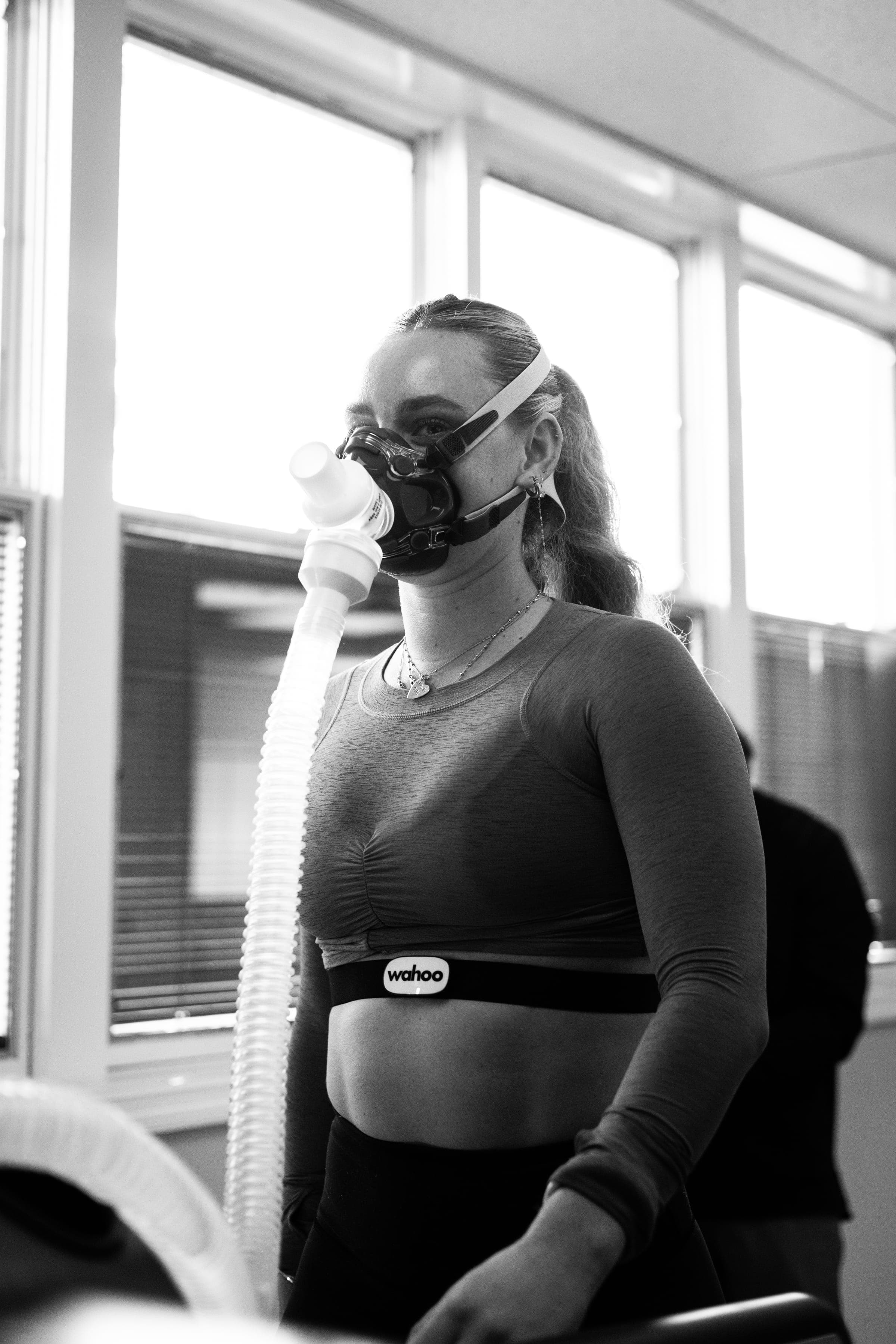
Health is more than the absence of disease
The six domains below are measured together and read against each other. Each section covers why we measure it and how we use what it tells us.
What we measure
The six domains
Cardiometabolic Health
Look beyond standard screening to better understand cardiovascular risk, metabolic health, and the biomarkers that influence long-term health.
Read moreShow less
Cardiovascular and metabolic disease often develops gradually, long before it causes symptoms. Blood pressure, cholesterol, glucose regulation, inflammation, and other markers can begin moving in the wrong direction while you still feel healthy and function normally. Identifying these changes early creates an opportunity to intervene when prevention may have the greatest impact.
But the goal is not simply to determine whether individual laboratory values fall inside or outside a reference range. We want to understand patterns of risk: how effectively your body regulates and uses energy, whether cardiovascular risk is accumulating, and how these findings relate to your family history, body composition, fitness, nutrition, lifestyle, and other health data.
This matters because cardiovascular and metabolic health influence more than the future risk of heart disease or diabetes. They affect energy, exercise capacity, cognitive and sexual health, and your ability to remain active and independent as you age.
By measuring these factors over time, we can move beyond a snapshot of whether you are “healthy today” and begin evaluating your health trajectory. The objective is to identify meaningful risk early, determine which factors are most modifiable, and focus attention where it is most likely to improve both long-term health and how you function today.
Cardiorespiratory Fitness
Measure how effectively your heart, lungs, and muscles work together — and identify opportunities to improve fitness, metabolic health, and longevity.
Read moreShow less
Cardiorespiratory fitness reflects how effectively your heart, lungs, circulation, and muscles work together to deliver and use oxygen. It is one of the strongest objective measures of physical capacity and is consistently associated with cardiovascular health, functional independence, and longevity.
It also has an immediate, practical meaning. Your aerobic capacity influences how easily you climb stairs, hike, run, cycle, play with your children, recover between efforts, or simply get through a physically demanding day. Greater fitness provides greater physiological reserve (the difference between what your body is capable of doing and what everyday life requires of it).
Importantly, fitness cannot be fully understood by looking at exercise habits alone. Two people performing similar workouts may have very different aerobic capacities, metabolic responses, exercise thresholds, or physiological limitations.
Measuring cardiorespiratory fitness allows us to understand not only how fit you are, but how your body responds as exercise becomes progressively more demanding. That information can help identify strengths and limitations, establish individualized training intensities, and determine whether exercise, recovery, and nutrition are producing the intended adaptations.
The goal is not simply a higher VO₂ max. It is to build and preserve the physiological capacity to do more—with less effort—for as much of life as possible.
Body Composition
Lean mass, visceral fat, and fat distribution — what weight alone can't tell you.
Read moreShow less
Body weight tells us how heavy you are. It tells us surprisingly little about what that weight represents.
Muscle and fat have very different implications for metabolic health, physical function, and long-term health. Two people with identical body weight—or even identical BMI—can have substantially different metabolic risk, strength, physical capacity, and health trajectories.
Body composition becomes increasingly important as we age. Maintaining adequate muscle helps preserve strength, mobility, glucose regulation, resilience during illness or injury, and the ability to remain physically independent. Excess body fat, particularly when concentrated around the abdomen and internal organs, is associated with greater cardiometabolic risk. At the same time, pursuing weight loss without considering body composition can result in the unintended loss of valuable lean tissue.
This is why we are generally more interested in what is changing than simply what the scale says.
Body composition provides context for nutrition, exercise, and weight-management decisions. It allows us to distinguish fat loss from lean-tissue loss, evaluate whether training and nutrition are producing the desired changes, and follow those changes over time.
The objective is not to pursue an arbitrary weight or body-fat percentage. It is to develop and maintain a body composition that supports metabolic health, physical performance, resilience, and the activities you want to continue doing throughout your life.
Strength, Power & Movement
Living longer has considerably more value when you retain the physical capacity to live the way you want.
Read moreShow less
Living longer has considerably more value when you retain the physical capacity to live the way you want.
Strength allows you to lift, carry, climb, work, and maintain independence. Power helps you accelerate, jump, react, and recover from a loss of balance. Mobility, balance, and movement capacity allow you to use these abilities effectively across the activities that matter to you.
These qualities can decline gradually with age and inactivity, often before the loss becomes obvious in everyday life. Importantly, they are also highly trainable. Identifying limitations early creates an opportunity to build and preserve physical reserve rather than waiting until declining function becomes a problem.
Traditional exercise recommendations often focus on whether someone exercises and how many minutes they accumulate each week. We are interested in a different question: What is your body actually capable of doing?
Objective assessment of strength, power, balance, and movement helps identify specific strengths and limitations and provides a baseline from which improvement can be measured. It can also make exercise more purposeful by directing training, recovery, and nutritional strategies toward the physical qualities that need the most attention.
The objective is not simply to perform better on a fitness test. It is to preserve the capacity to travel, play sports, carry your luggage, get off the floor, react to a stumble, remain independent, and continue participating fully in life.
Hormonal & Nutritional Health
Targeted hormonal and nutritional assessment based on your symptoms, health, and goals — focused on what is clinically relevant and actionable.
Read moreShow less
Hormones and nutrients influence nearly every major physiological system, including energy metabolism, muscle and bone health, cognition, blood formation, sexual function, and recovery from exercise. When a meaningful deficiency or hormonal abnormality is present, the effects can be substantial.
The challenge is that symptoms such as fatigue, poor recovery, difficulty concentrating, changes in body composition, or reduced exercise performance are rarely specific to a single hormone or nutrient. They may reflect sleep, nutrition, training, medications, stress, underlying disease, or several factors acting together.
This is why laboratory results are most useful when interpreted within the broader context of your health.
Our goal is not to “optimize” every laboratory value or assume that more testing, supplementation, or hormone treatment is inherently better. Normal physiology varies between individuals, and isolated numbers do not necessarily explain how someone feels or functions.
Instead, hormonal and nutritional assessment can help identify clinically meaningful deficiencies or dysregulation, investigate potential contributors to symptoms or changes in performance, and determine when intervention is (or is not) likely to be beneficial.
The purpose of measuring is to reduce guesswork. By combining objective data with symptoms, medical history, dietary patterns, medications, training, sleep, and other health information, we can focus nutritional, behavioral, or medical interventions where they are most likely to make a meaningful difference.
Sleep, Recovery & Lifestyle
The tactics, skills, and support that improve daily performance and long-term health.
Read moreShow less
What you do between workouts, appointments, and medical tests has an enormous influence on what happens inside your body.
Sleep, physical activity, stress, nutrition, alcohol, recovery, and daily routines influence cardiovascular health, metabolism, cognitive performance, mood, hormonal function, exercise adaptation, and long-term disease risk. These factors are sometimes grouped together as “lifestyle,” but that term can understate their biological importance. They are continuous physiological inputs that shape how your body functions and adapts.
The challenge is that more is not always better. More exercise without adequate recovery can impair adaptation and performance. More time in bed does not necessarily mean better sleep. A theoretically ideal diet or training program has little value if it cannot be sustained within the realities of your life.
Measurement can help distinguish perception from pattern. When appropriate, we can examine sleep, activity, recovery, training load, nutrition, and other behaviors alongside objective health and performance data to understand how they relate to how you feel and function.
The goal is not to quantify every moment of your life or generate another stream of data to worry about. It is to identify the behaviors that meaningfully influence your health, determine which changes are worth your effort, and build sustainable habits that support energy, performance, recovery, and long-term health.
Who this is for
People who are no longer willing to leave their future health to chance, and who want a physician-partner to help build the next several decades intentionally: the tactics, skills, and support to improve immediate performance while sustaining long-term health, an actionable plan, behavioral strategies, and guidance. People ready to stop cobbling together health solutions in the wild west of wellness — a market dominated by exaggerated claims, weak evidence, fads, and snake oil.
Who this is for
Three people who tend to find us
The wake-up call
A health scare, weight gain, family history, or abnormal labs.
The plateau
Already exercising and eating well — progress has stalled, and they want expertise.
The optimizer
Successful professionally and wants health to match. Wants objective measurement and values efficiency.
Next step
See where you stand
Start with a free 15-minute discovery call, or book the Baseline Assessment directly.